Small
Plant
CR 1/2
Unaligned
Tanglevine
Mischievous Entangler
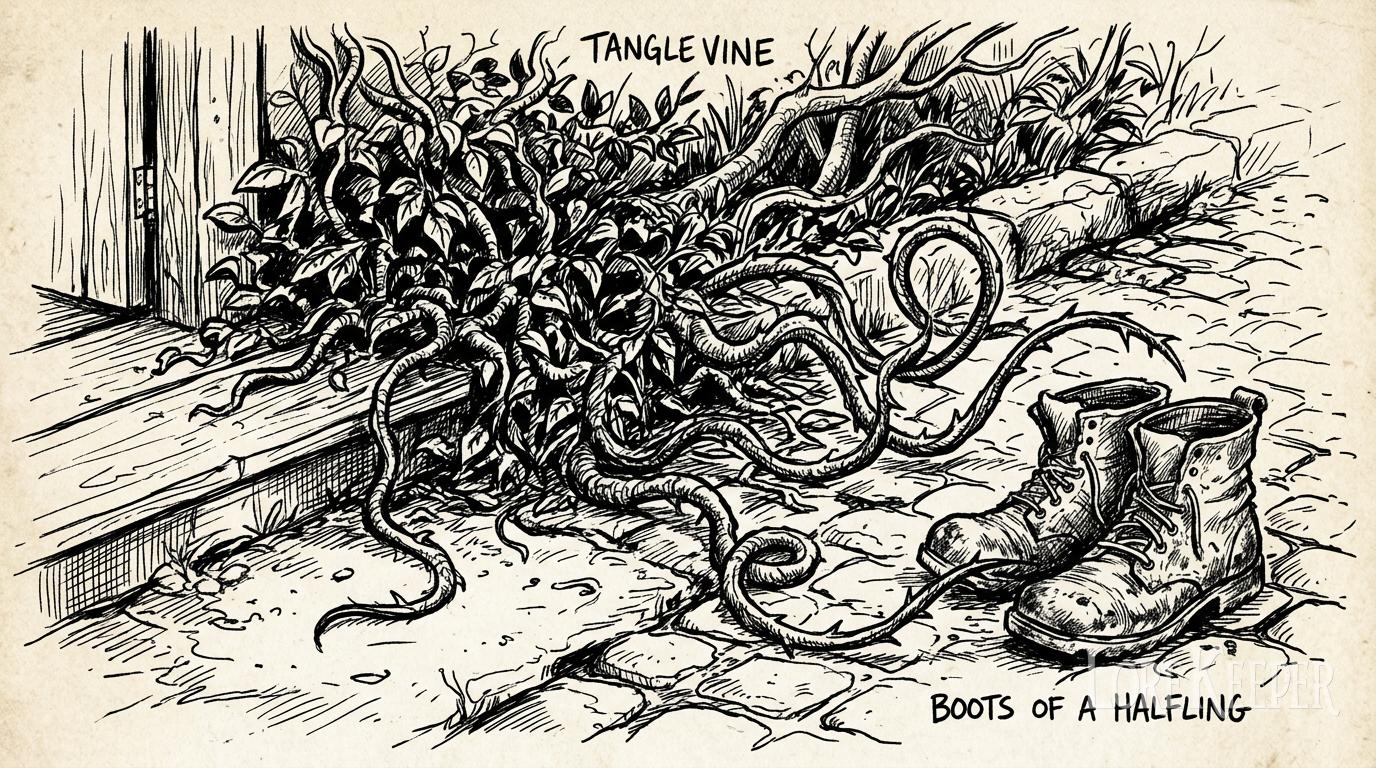
A low, creeping plant with curious, dextrous tendrils, the Tanglevine delights in small, humiliating sabotage: it slithers along pathways and thresholds to knot the laces of hurried travelers. When it finds shoes, it will wind itself about them in near-invisible loops, binding feet together and tripping the careless. In combat it lashes with whip-like tendrils, seeking to immobilize ankles and hamstring foes rather than to crush them.
Armour
14
natural armor
Hit points
52
8d6+24
Speed
20ft
20 ft., climb 30 ft.
Challenge
1/2
100 XP
STR
14
+2
DEX
14
+2
CON
16
+3
INT
6
-2
WIS
12
+1
CHA
7
-2
Saving throws
DEX +4
Skills
Stealth +4
Senses
darkvision 60 ft., passive Perception 11
Languages
understands Common but can't speak
Multiattack. The Tanglevine makes two Tendril attacks.
Tendril. Melee Weapon Attack: +4 to hit, reach 10 ft., one target. Hit: 7 (1d6+2) bludgeoning damage. If the target is wearing shoes, boots, or otherwise has laces, the Tanglevine attempts to knot them: the target must succeed on a DC 12 Dexterity saving throw or have its movement speed halved and suffer disadvantage on Dexterity checks and saving throws that involve moving for 1 minute. Affected creatures can use an action to make a DC 10 Dexterity (Sleight of Hand) or Strength (Athletics) check to free their footwear; success ends the effect early.
Entangling Burst (Recharge 5-6). The Tanglevine releases a scatter of sticky rootlets in a 10-foot radius centered on itself. Each creature in that area must succeed on a DC 12 Strength saving throw or be restrained at the feet (their speed becomes 0 and they have disadvantage on Dexterity saving throws) until the end of their next turn while the rootlets cling. A creature can use an action to succeed on a DC 11 Strength check to free its feet early.
Tanglevines are common in hedgerows, ruined courtyards, and the shadowed perimeters of gardens where human traffic is frequent. Folklore among rural post riders holds that a single Tanglevine is enough to slow a messenger and cause a first-class letter to arrive days late. Botanists note that the plant seems to have evolved alongside human settlements, exploiting footwear as a niche for anchoring itself and dispersing seed pods hidden in tied shoelaces. The Royal Herbarium of Gossin recorded the first formal study of Tanglevines by scholar Vennor Cask, who tracked a colony that had learned to slither through a village's gutter system. Local hunters of pests form small patrols—known as the Knotwardens—to cut back swathes of Tanglevine where roads and town gates meet. A few itinerant circles of hedge-mages cultivate tanglevines for use in traps and stagecraft; the plants are prized for nonlethal immobilization and petty pranks when handled by those who understand their temperament.
A Tanglevine grows as a low mat of dark, glossy leaves (each 1–2 inches long) from which multiple wiry stems extend like the fingers of an idle hand. Each stem is thin as a pencil, banded with subtle nodes, and ends in a coiling tendril that resembles braided cord. The tendrils are smooth and slightly sticky; fine webbing of fibrous rootlets can adhere to leather and cloth. Seed pods—small, oblong capsules that look like dried peas—hide in the leaf axils. When crawling they keep most of their mass low to the ground, presenting only the slender tendrils to the legs of passersby. Scale: a Tanglevine is about knee-high to a halfling, its tendrils reaching as far as 10 feet when fully extended along a doorway or doorway frame.
Made with the free LoreKeeper Monster Generator · D&D 5e-compatible stat block · Free to use at your table · Licence
More Plants
Mycogramm
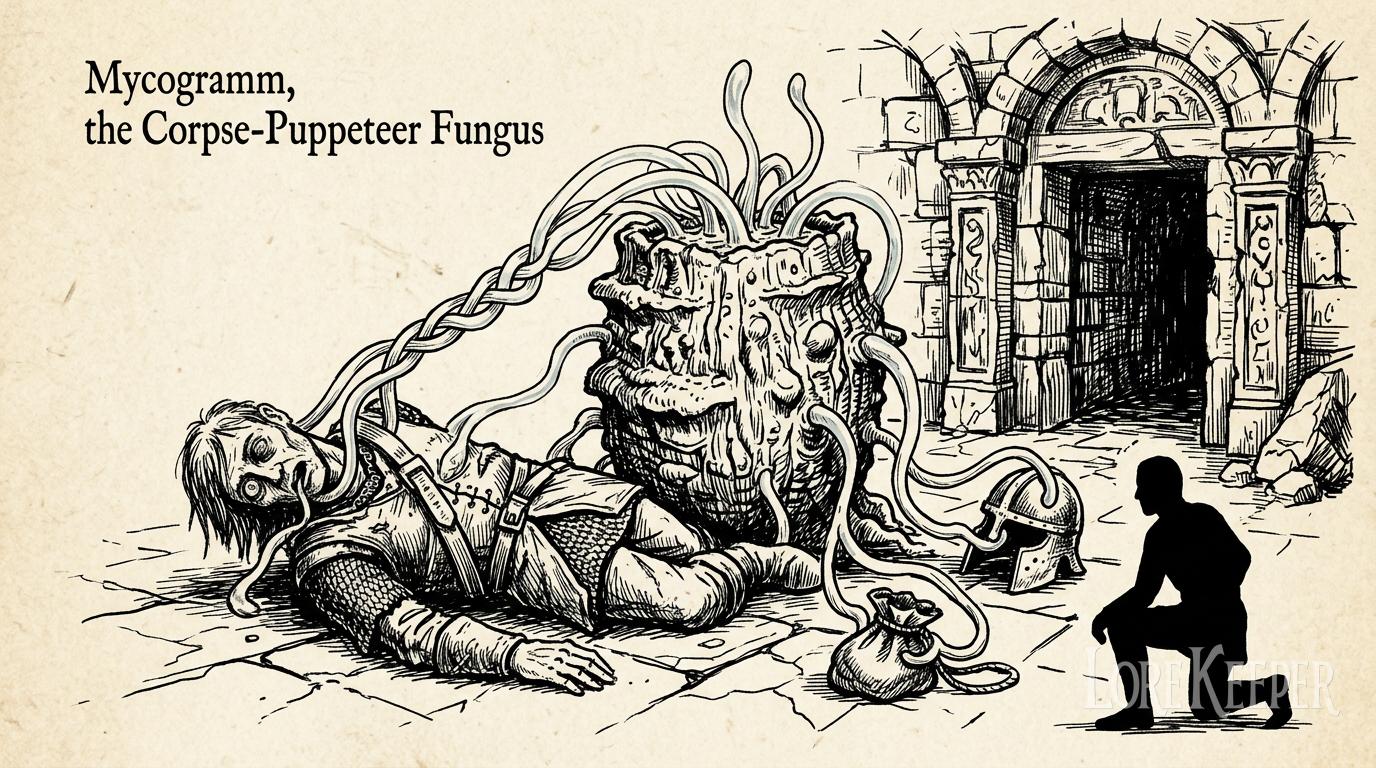
A sodden, lichen-slick growth sprouting a tangle of pale tendrils and ink-dark sporopods, the Mycogramm anchors itself to a fallen adventurer and turns bone and sinew into a living marionette. Its…
Cinderling Gourd
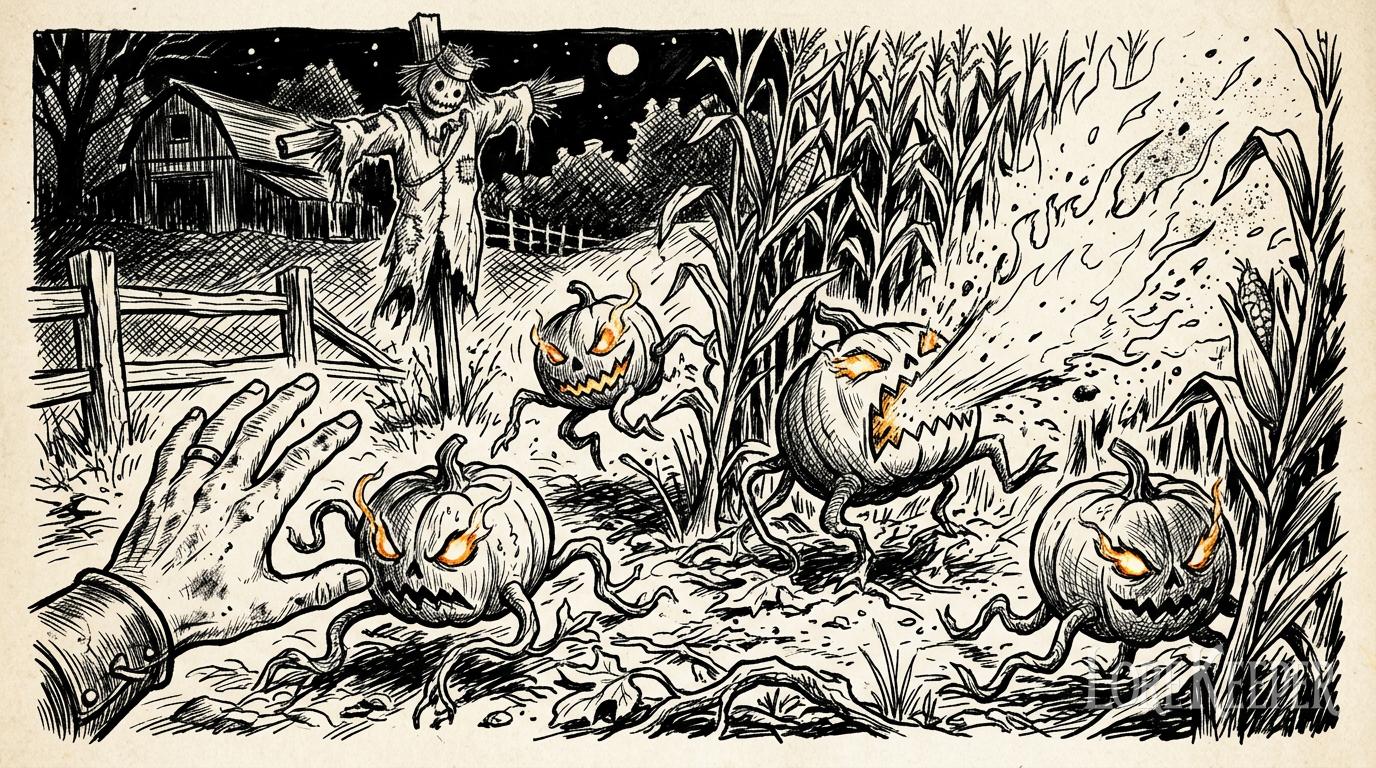
Cinderling Gourds look like grinning pumpkins no larger than a child's head, but their eyes glow with inner ember and their green vines hiss like tongues of flame. They skitter across hard-packed…
Pricklewit
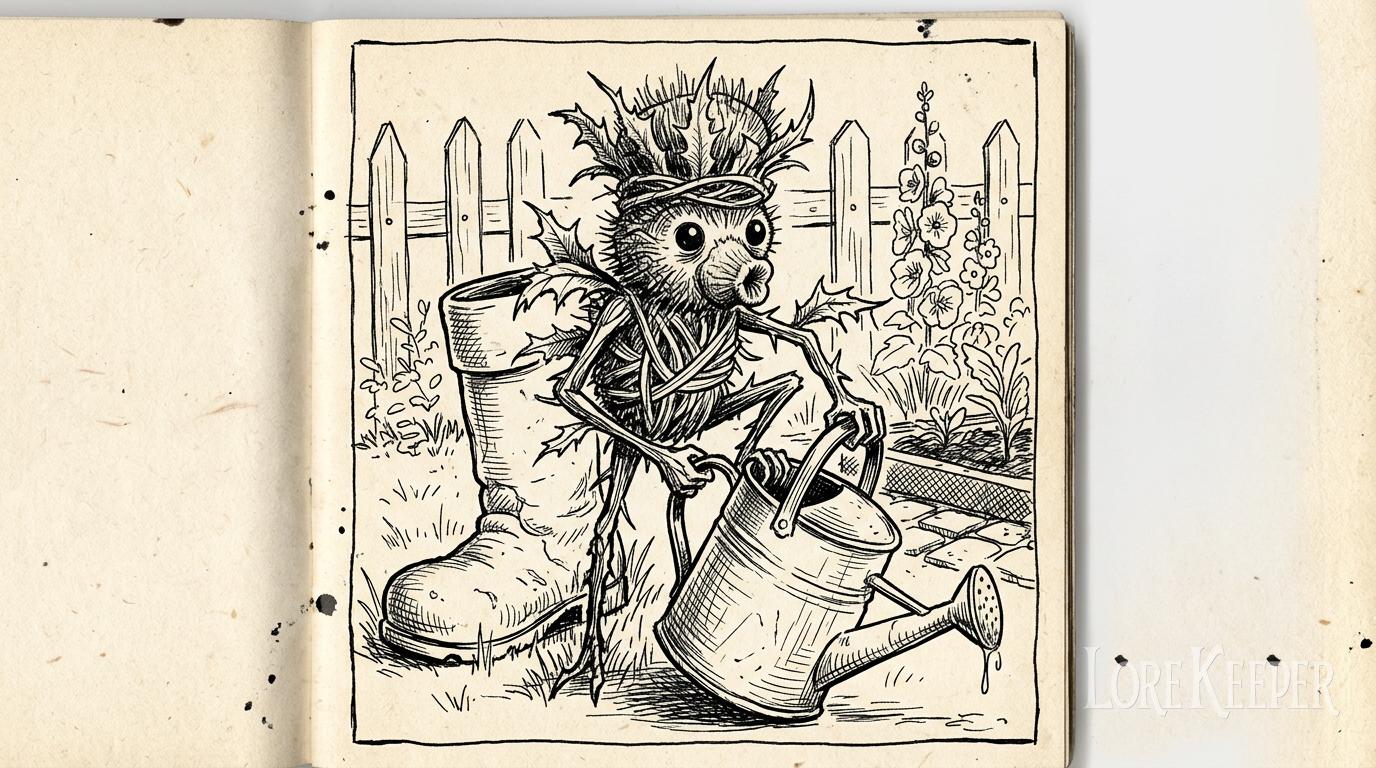
A Pricklewit is a foul-tempered, thistle-green sprite no larger than a household cat, all briar and bad temper. It darts from flowerbed to compost heap, leaving snagged hems and bleeding fingers in…
Piptember
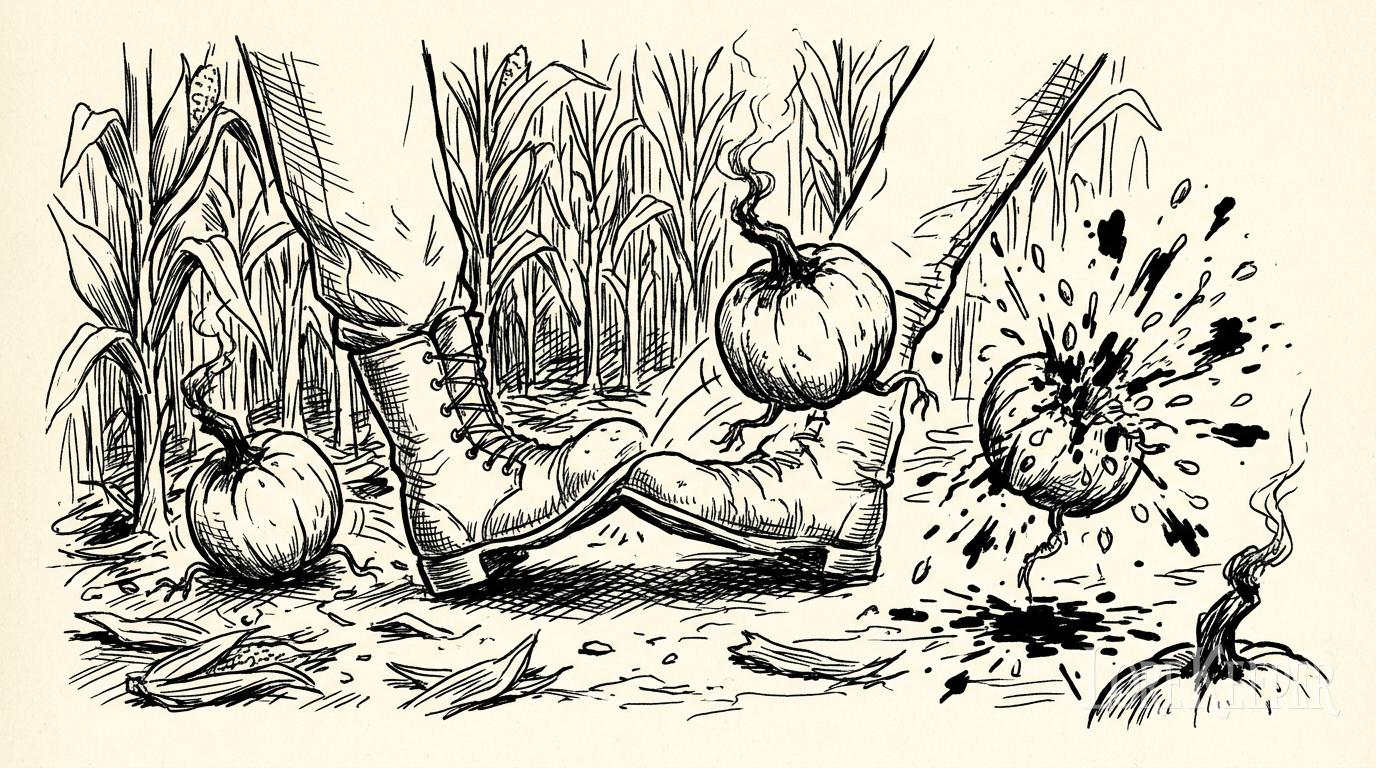
No taller than a boot and crowned with a smoking, candle-like stem, a Piptember looks innocent until it rolls. In a flash it tucks, tumbles through undergrowth and hurls itself into a cluster of…
Gourdricant
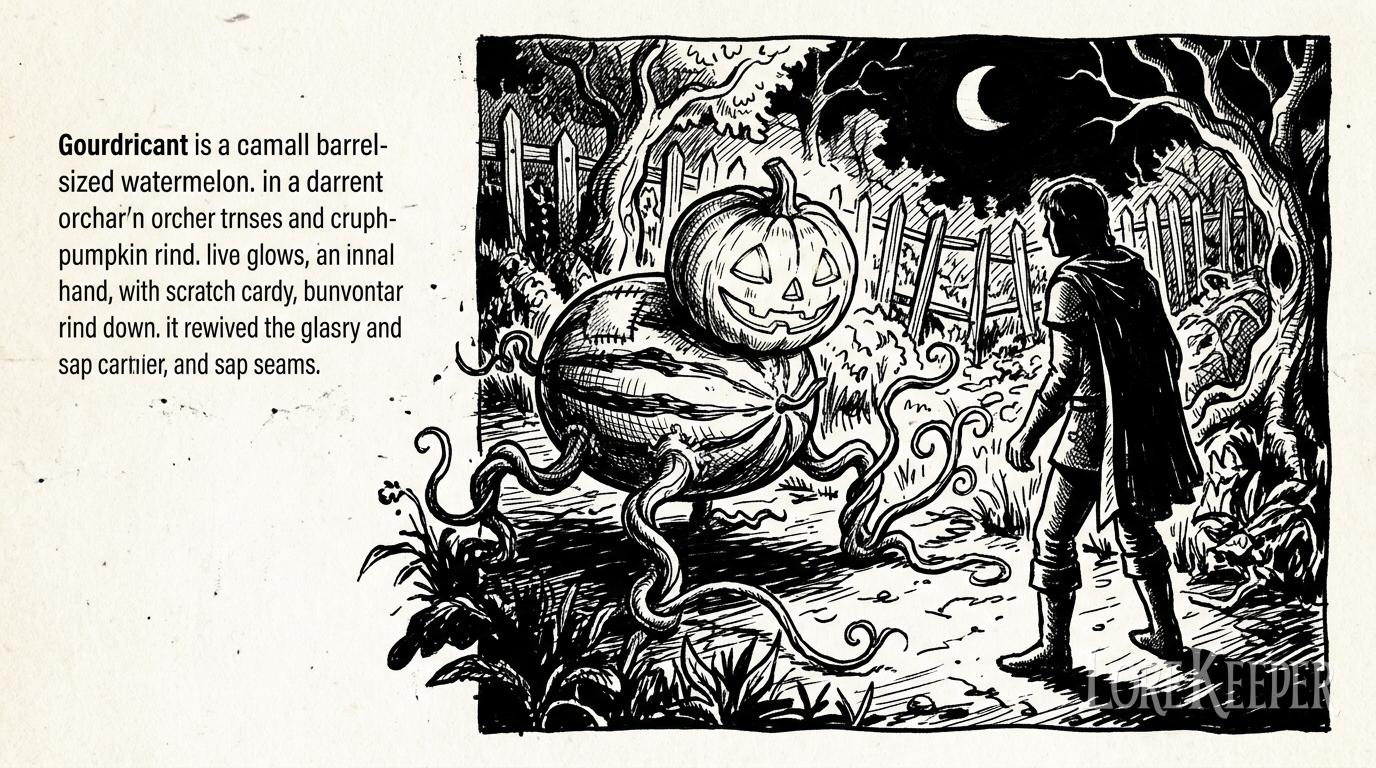
A talking watermelon with a carved, flickering jack-o'-lantern for a head, Gourdricants speak with a hollow, papery chuckle as they weave simple magics. They lurch on squat vine-legs, lash glowing…
Tollroot Warden
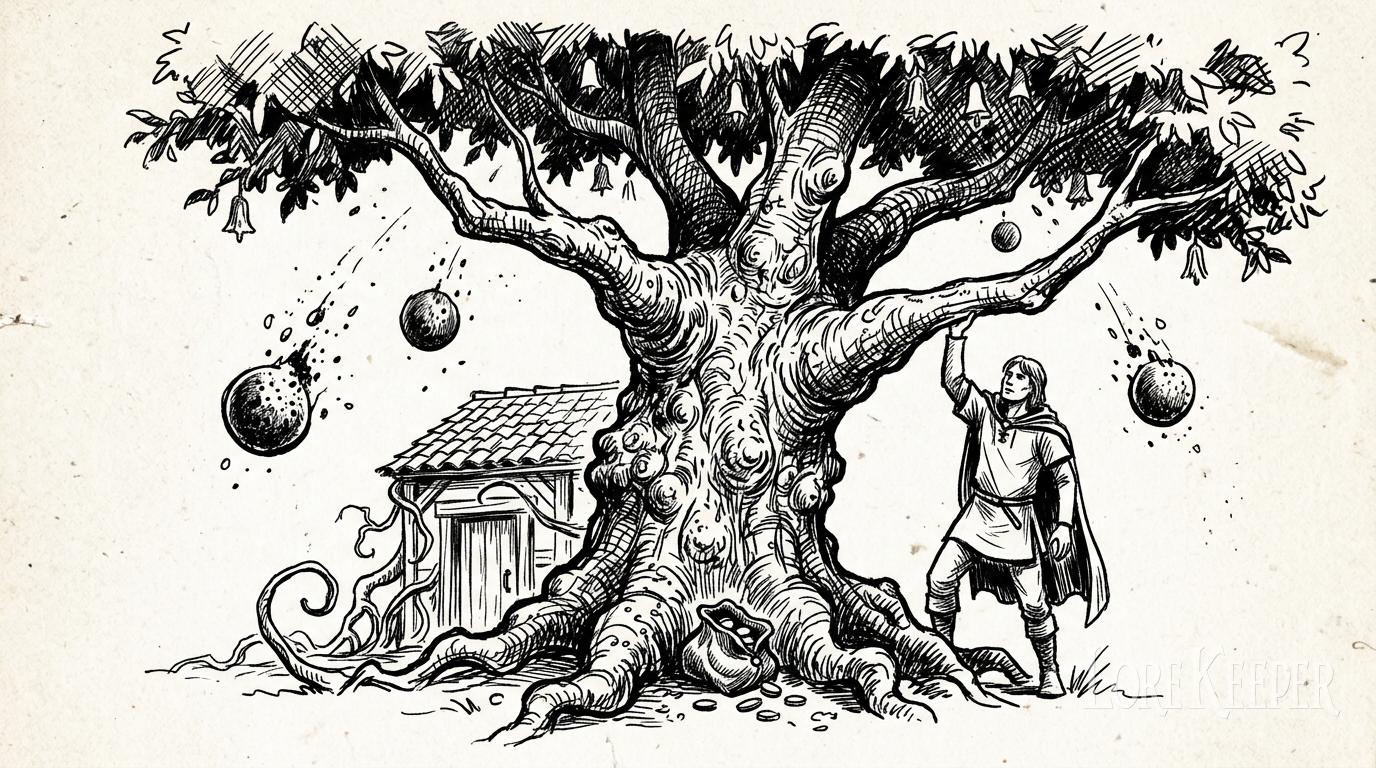
At first glance it is a squat, knotted orchard tree; up close it watches coin pouches with patient, vegetal hunger. The Tollroot Warden drops fat, lacquered fruits only where small bells or the…