Small
Monstrosity
CR 1/4
Unaligned
Brindlequill
Thatched Roof Nester
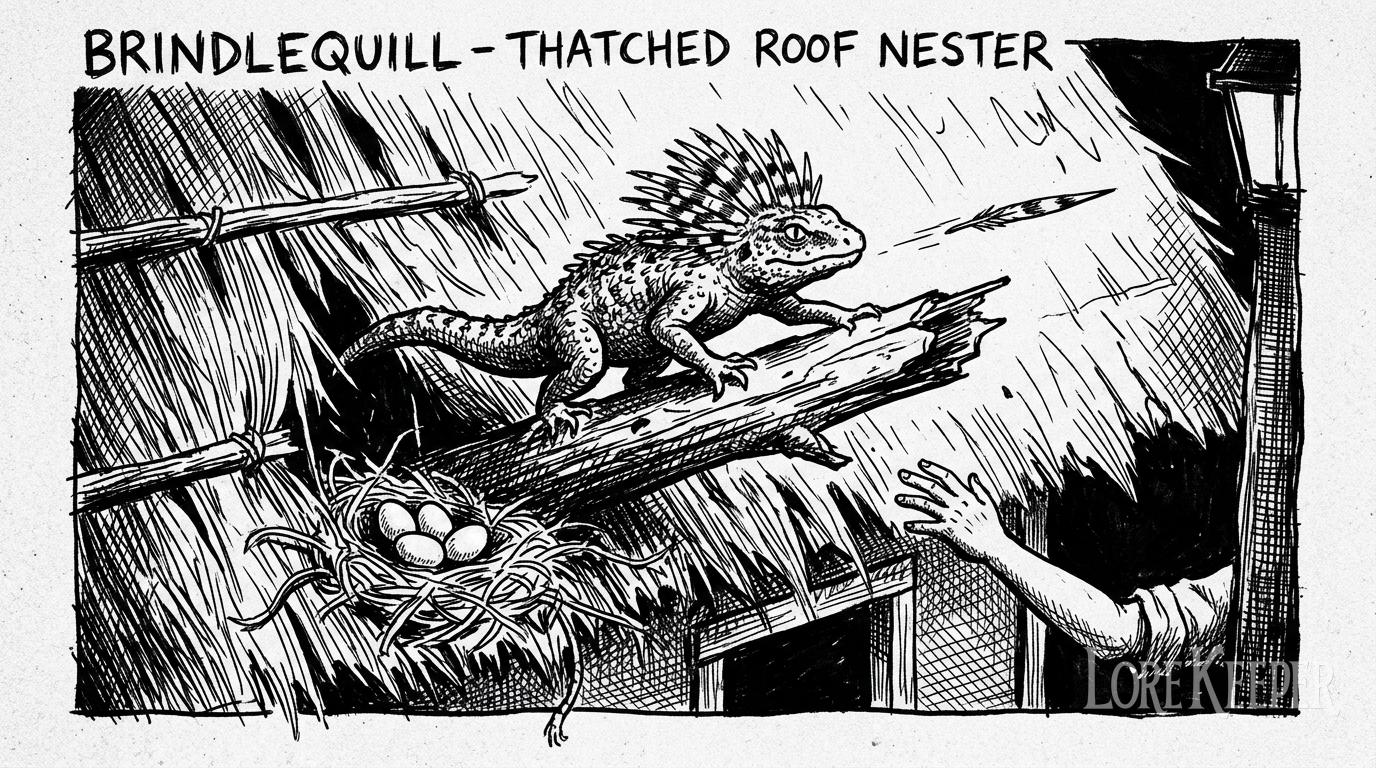
A Brindlequill looks like a squat, quick lizard overlain with a halo of brittle quills; it scuttles along rafters and among straw as if the thatch were an extension of its own skin. At night dozens of tiny silhouettes and the soft rasp of scratching are all that give away a nest of these creatures — until one launches a spray of barbed quills that rattle like thrown pins, or leaps and bites at a hand reaching for eggs.
Armour
13
natural armor (overlapping quills)
Hit points
27
6d6+6
Speed
20ft
20 ft., climb 30 ft.
Challenge
1/4
50 XP
STR
8
-1
DEX
14
+2
CON
12
+1
INT
3
-4
WIS
12
+1
CHA
6
-2
Saving throws
DEX +4
Skills
Stealth +4, Perception +3
Senses
darkvision 30 ft., passive Perception 13
Languages
understands Common but can't speak
Multiattack. The Brindlequill makes one Bite attack and one Spine Quill attack.
Bite. Melee Weapon Attack: +4 to hit, reach 5 ft., one target. Hit: 4 (1d6-1) piercing damage.
Spine Quill. Ranged Weapon Attack: +4 to hit, range 20/60 ft., one target. Hit: 5 (1d4+2) piercing damage, and the target must succeed on a DC 12 Dexterity saving throw or a quill embeds in the flesh. A creature with an embedded quill takes 1 piercing damage at the start of each of its turns. Removing a quill requires a successful DC 12 Dexterity check using thieves' tools or a single action spent pulling it free (automatic if a creature is aided by a healer's kit or magic).
Brindlequills are a common nuisance in rural and timbered settlements where thatched roofs are used. They excavate shallow nests in packed straw, laying clutches of pearly eggs among dry fibers warmed by sun and smoke. Farmers know them as indicators of neglected roofs; thatch riddled with Brindlequill tunnels will leak and smolder, so roofers often clear nests before re-thatching. The Weaverfolk of Harnstead keep a calendar of 'quill season' when they inspect common houses. The bristled lizards are opportunistic: they will eat beetles, moths, and the occasional nestling, but their presence is most destructive through their tunneling and the stickiness of their quill barbs, which can pull thatch apart over time. Scholars differ on the origin of Brindlequills. Old shepherd accounts claim they are descended from a single, oversized skink struck by a weaver's curse centuries ago; modern naturalists such as Marinus Fold argue they're an adaptive offshoot of common roof skinks that evolved extra quills to deter barn owls and other predators. Local legends tell of the Black Thatch Covenant, a small cult that once bred Brindlequills to sabotage noble houses; the Covenant's hideout, the Sootfen Hamlet, is now a ruin where stray herds of brindlequills nest in collapsed cottages. Roofers and hedge mages sometimes trap and relocate them rather than slay them outright — a living roof with no quills robs barns of pest control, while too many quills ruin the thatch.
Brindlequills are about 2–3 feet long from snout to tail and stand roughly the height of a kneehigh stool when crouched — easily comparable to the length of a human forearm. Their bodies are low and flattened, scaly skin mottled brown, straw-yellow, and slate; the skin has a satin sheen where it rubs against thatch. Along the dorsal ridge and sides are dozens of short, stiff quills — hollow, tapered, and banded in dark and pale rings — that bristle outward when the creature is alarmed. The head is triangular with lidless eyes that flash a coppery red in lamplight and a small blunt snout adapted for rooting in straw. Forefeet are dexterous with tiny hooked claws for gripping rafters; hind feet are powerful for sudden leaps. The tail is short and spined, used as a counterbalance while it darts across brittle straw.
Made with the free LoreKeeper Monster Generator · D&D 5e-compatible stat block · Free to use at your table · Licence
More Monstrosities
Oculith
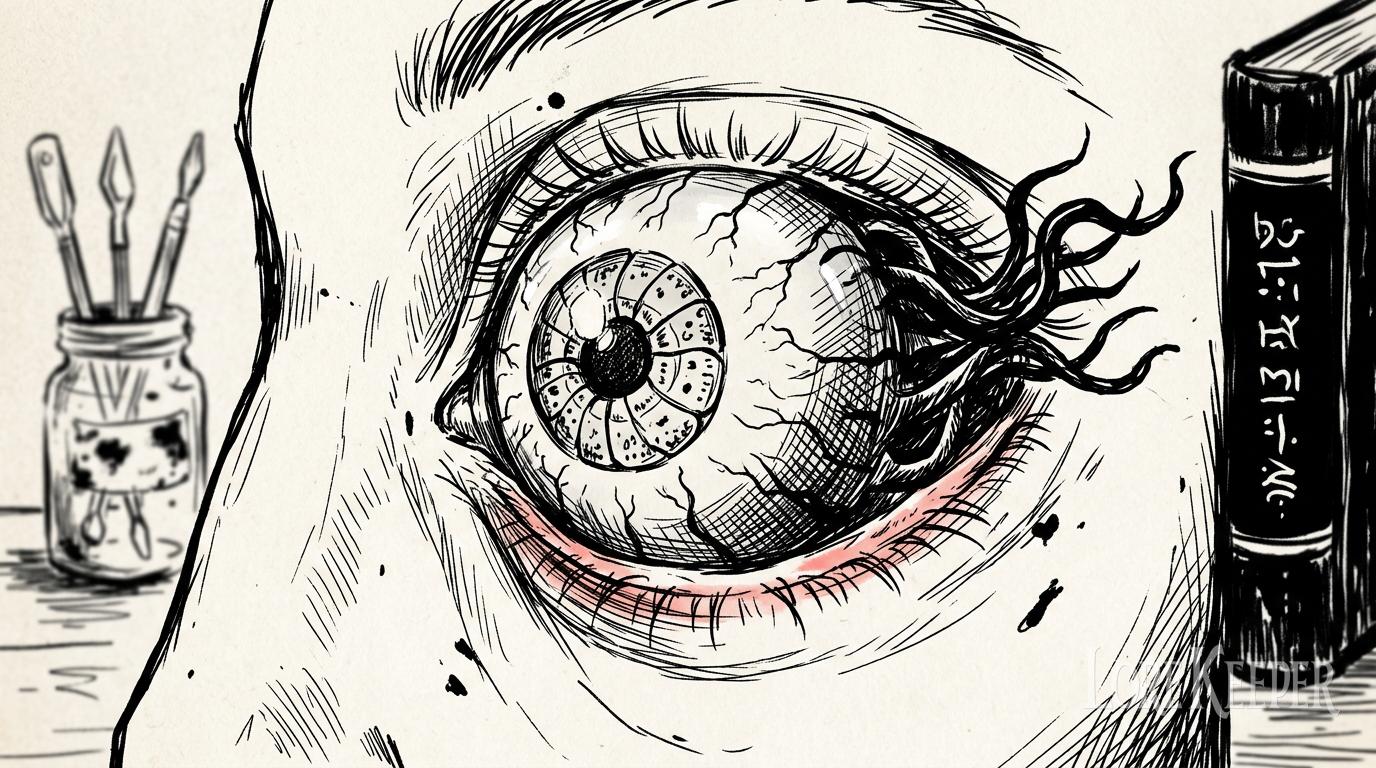
At a glance an ordinary prosthetic eye or a startlingly vivid replacement, the Oculith is a small, living ocular that prefers not to roam — it prefers to belong. When fused to a willing host it…
Marelung
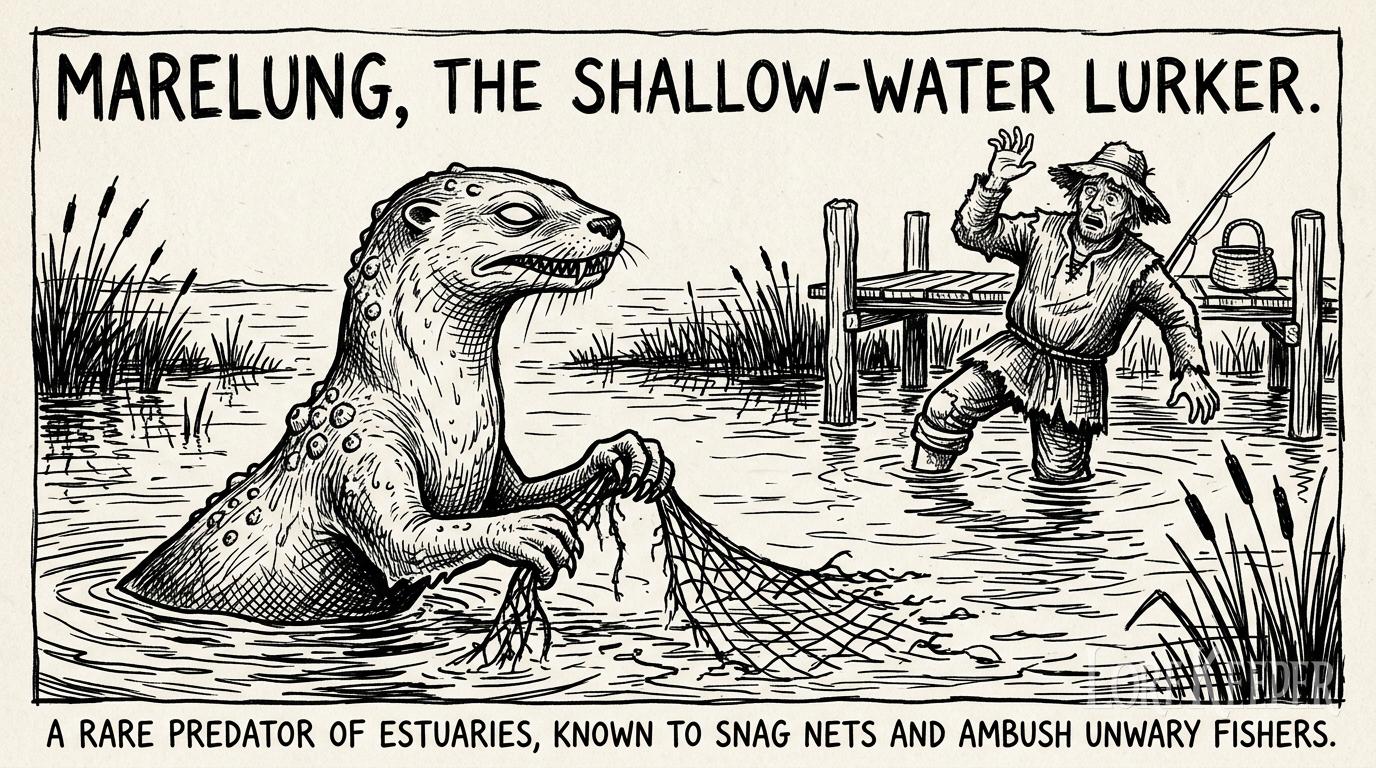
The Marelung is a lithe, amphibious predator of the tidal shallows: quick as a net's snap and eerily deliberate. It waits beneath waist-deep water, its milky, lidless eyes tracking the bob of a…
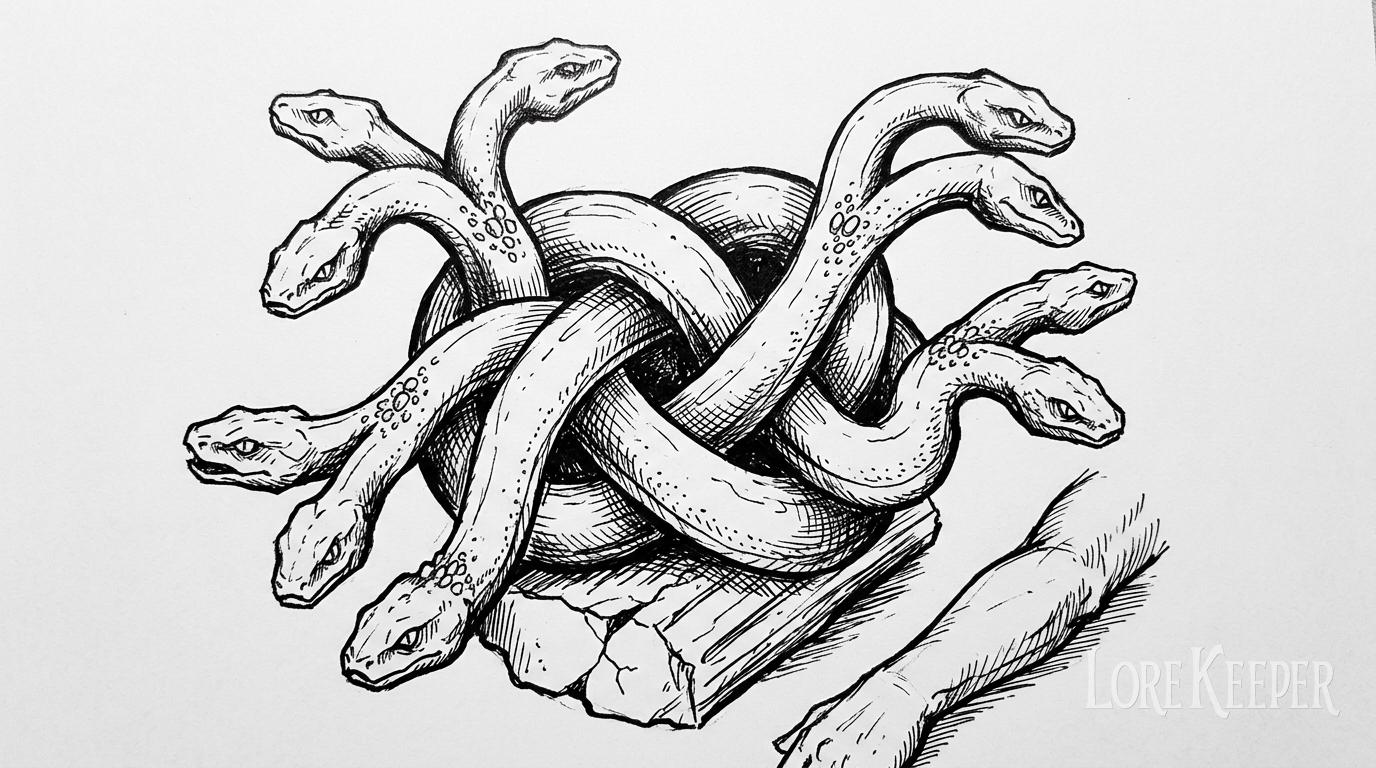
Viskeri Coil
A writhing cluster of four double-headed snakes, the Viskeri Coil moves as a single, disturbing organism: heads lunge independently while the braided bodies twist in perfect, predatory choreography…
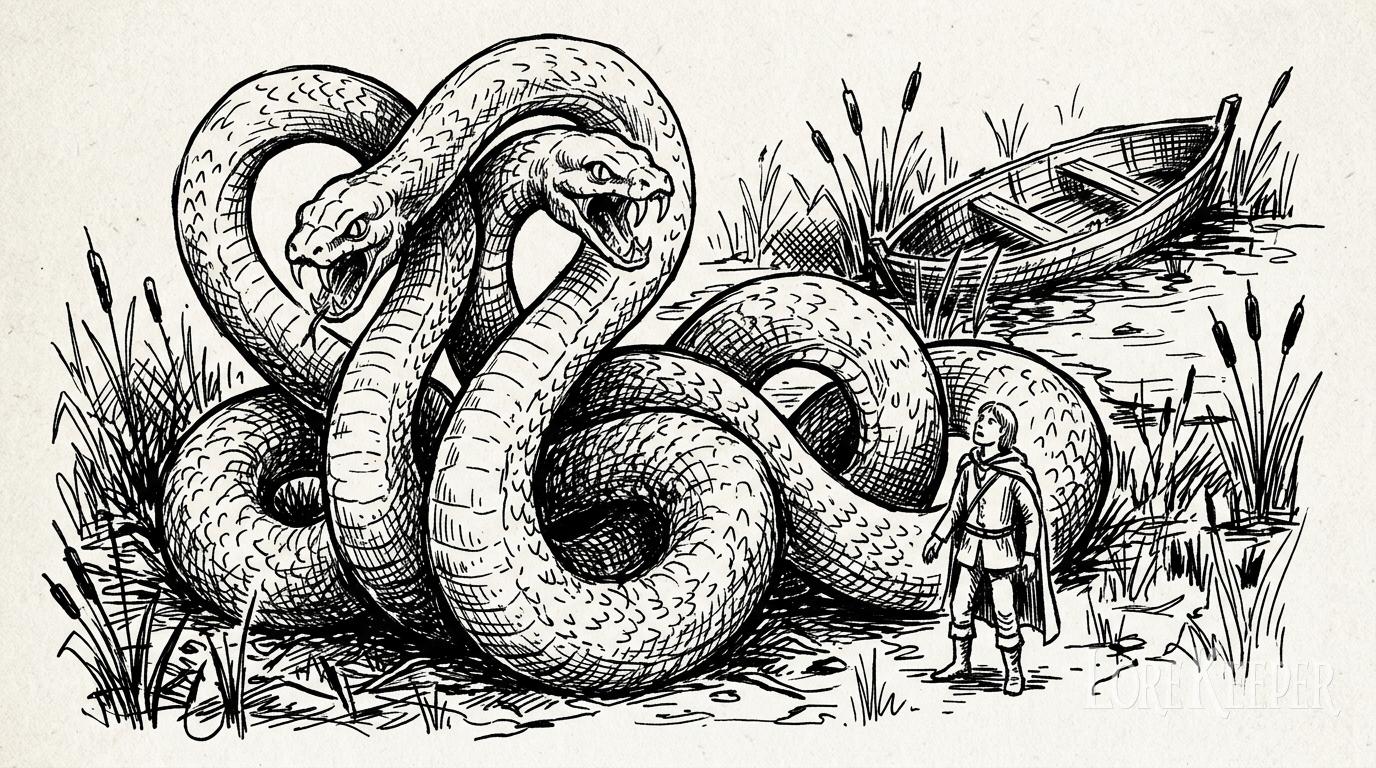
Qil'ith Quartet
A writhing bundle of four serpentine bodies, each pair sharing a single, split skull that bears two cold, unblinking eyes and separate snapping jaws. The Qil'ith Quartet moves like a single animal…
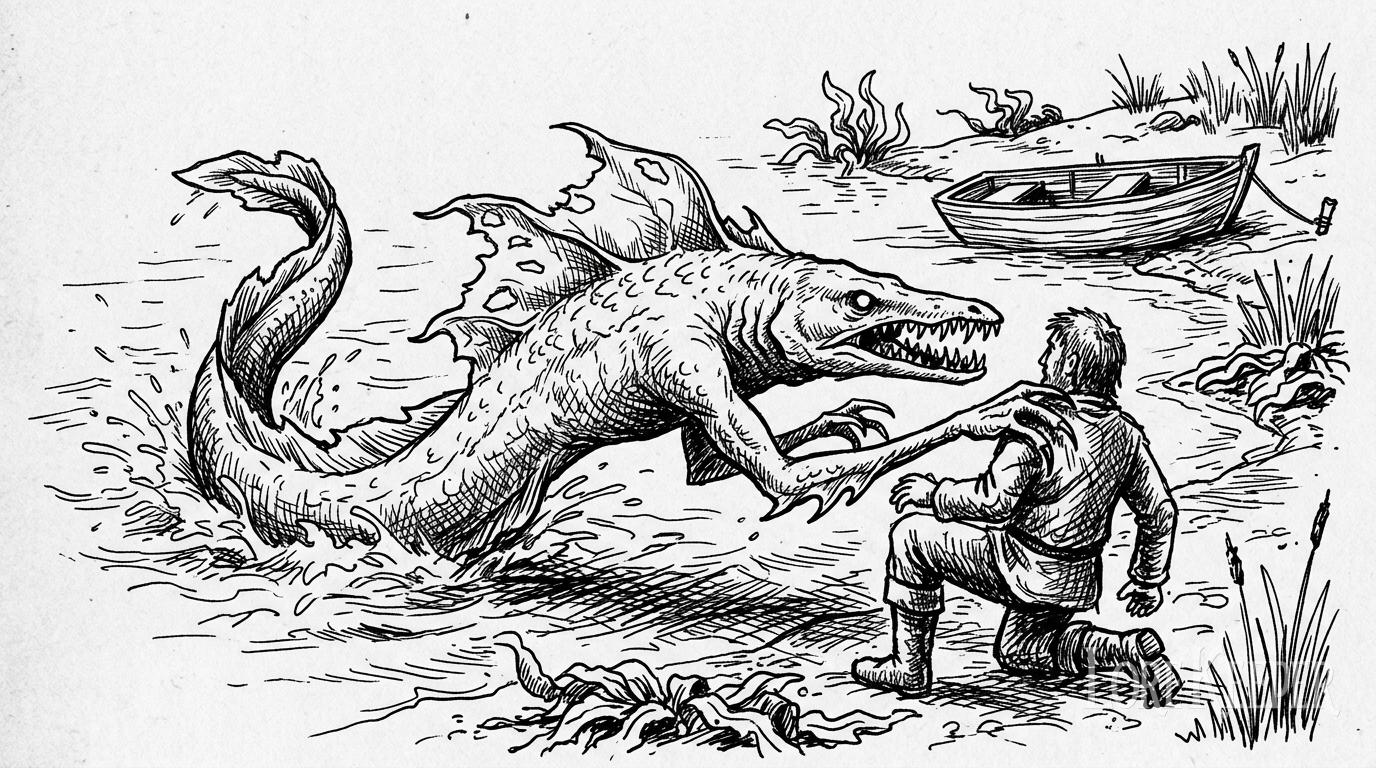
Marrusk
The Marrusk is a lean, eel-like ambusher that haunts tidal flats and kelp-choked coves. It waits just beneath ankle-deep surf, its mottled hide rippling with seaweed and sand, then lashes out with…
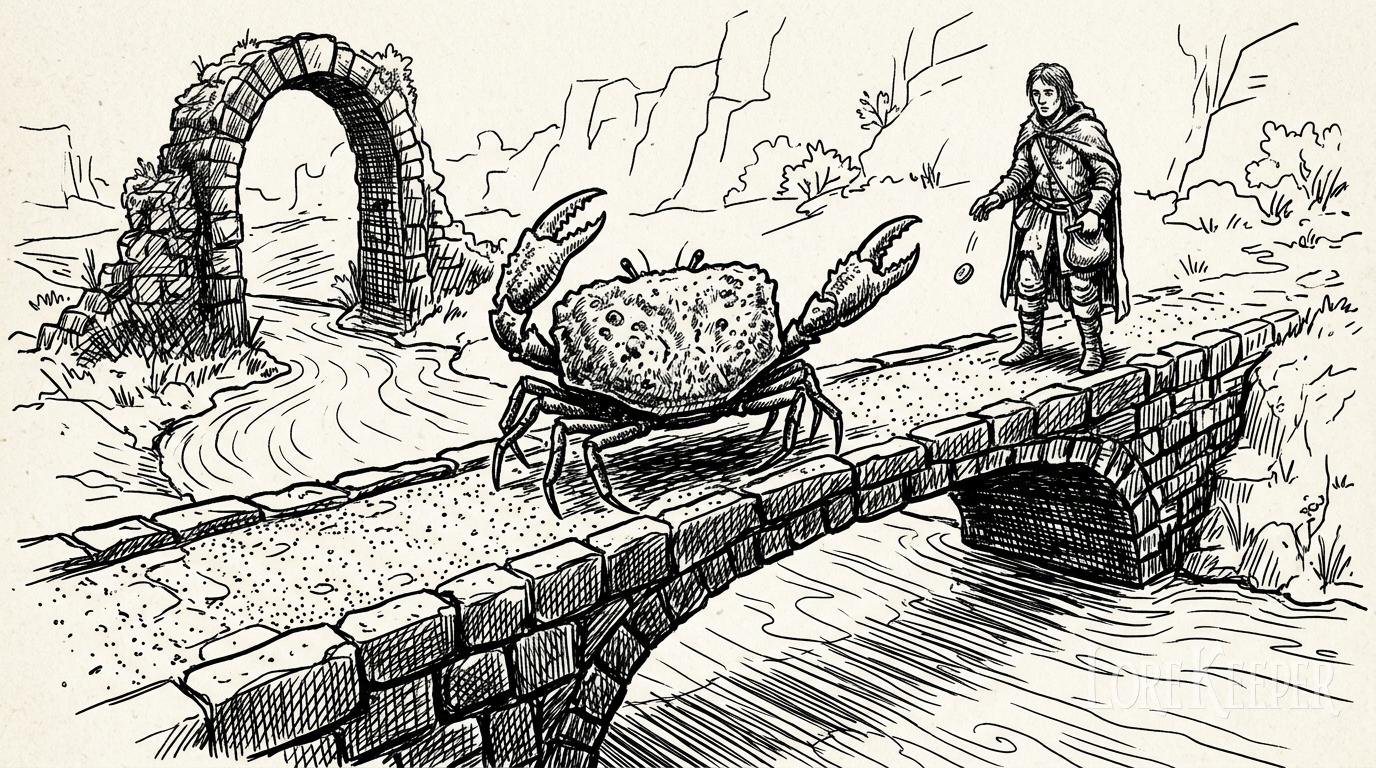
Kerrunax
A squat, shell-backed crab the size of a dire dog that perches astride a bridge like a living tollbooth, Kerrunax extorts travelers with a combination of brutish clamps and a peculiar, uncanny…